
Project Apollo: The Historic Mission That Took Humans to the Moon
Project Apollo stands as one of the greatest scientific and technological achievements in human history. It was a United States space program developed by NASA with a single bold goal: to land humans on the Moon and safely return them to Earth. At a time when space exploration was still in its infancy, Project Apollo pushed the boundaries of engineering, science, and human courage, forever changing how humanity views space.
The success of Project Apollo not only marked a major milestone in space exploration but also symbolized innovation, international competition, and the power of human determination.
What Was Project Apollo?
Project Apollo was a series of space missions conducted by the National Aeronautics and Space Administration (NASA). The program aimed to achieve a manned lunar landing, a goal announced publicly by U.S. President John F. Kennedy during the early 1960s.
The project included multiple missions, extensive astronaut training, spacecraft development, and the creation of new technologies. It laid the foundation for modern space science and future missions beyond Earth’s orbit.
Launching Date and Program Timeline
Project Apollo Official Launch:
July 1, 1960
Although planning and early concepts began earlier, Project Apollo formally became an active NASA program in 1960. The program continued until December 1972, spanning over a decade of research, testing, and missions.
During this time, NASA conducted a total of 17 Apollo missions, of which six successfully landed astronauts on the Moon.
Example Author Information
Example Author Name:
Dr. Michael Anderson
Role:
Aerospace Historian and Science Writer
Background:
Dr. Anderson specializes in space exploration history and has authored multiple publications on NASA programs, including Mercury, Gemini, and Apollo missions. His work focuses on making complex space science understandable for general audiences.
Historical Background of Project Apollo
Project Apollo was born during the Cold War era, when the United States and the Soviet Union were competing for technological and political dominance. After the Soviet Union successfully launched Sputnik and sent the first human into space, the United States intensified its efforts to lead in space exploration.
In 1961, President Kennedy declared the ambitious goal of landing a man on the Moon before the end of the decade. This announcement transformed Project Apollo into a national priority, leading to unprecedented funding and collaboration across government, industry, and academia.
Spacecraft and Technology Development
One of the most remarkable aspects of Project Apollo was the technology developed to support it. NASA designed several critical components:
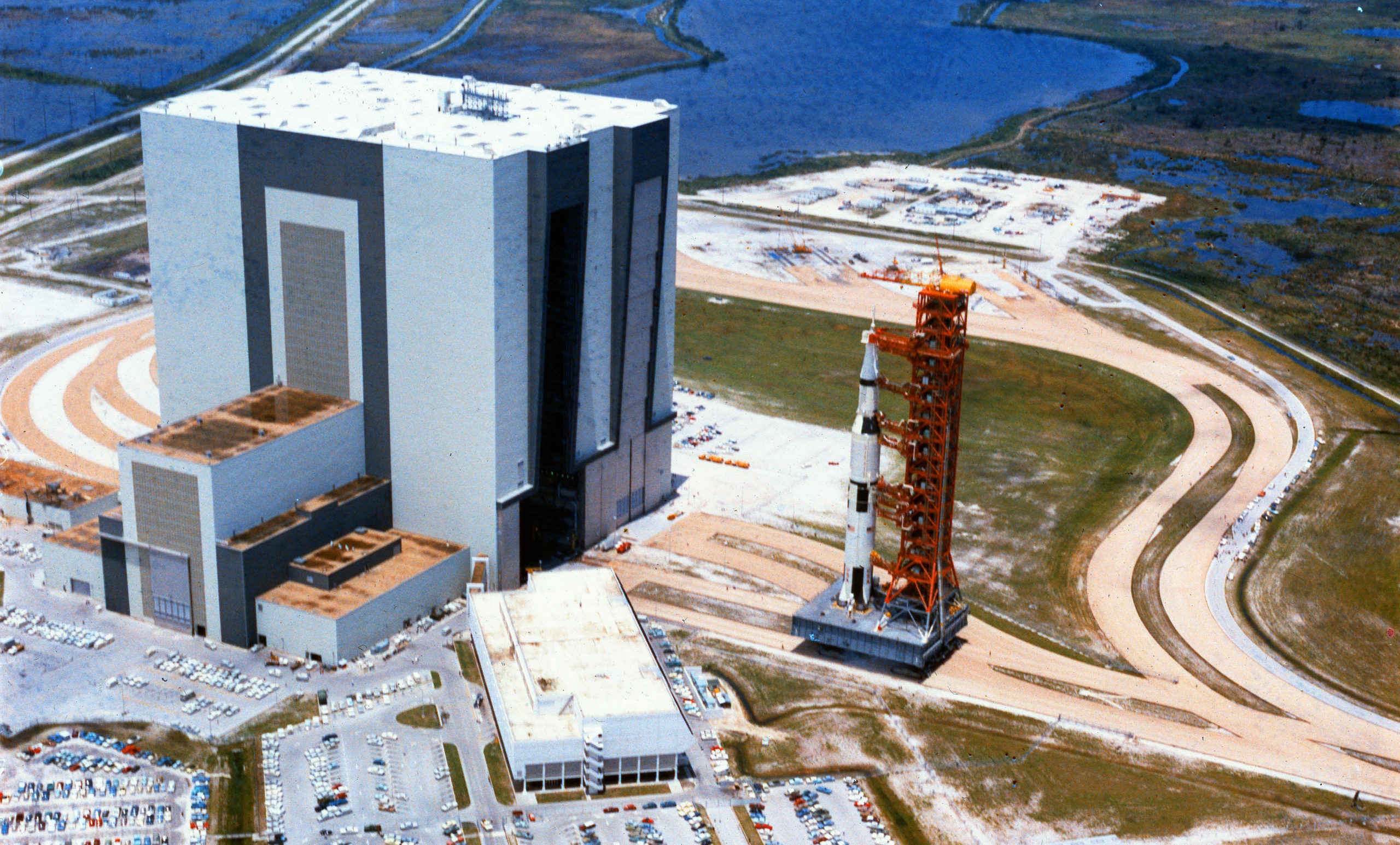
The Saturn V rocket, still considered the most powerful rocket ever successfully flown, was developed to carry astronauts and equipment into space.
The Command Module served as the main living space for astronauts during the mission.
The Service Module provided propulsion, power, and life-support systems.
The Lunar Module was specially designed to land on the Moon’s surface and return astronauts to lunar orbit.
These technologies required breakthroughs in computing, materials science, navigation, and communication.
Astronaut Training and Mission Preparation
Astronauts selected for Project Apollo underwent rigorous training. They studied engineering, astronomy, geology, and navigation. Simulated lunar environments were created on Earth to help astronauts prepare for walking on the Moon.
Training also included emergency procedures, physical conditioning, and countless hours in flight simulators. The preparation was intense because even small mistakes could lead to mission failure or loss of life.
Key Apollo Missions
While every mission contributed to the program’s success, several stand out:
Apollo 1 marked a tragic moment when a cabin fire during a test claimed the lives of three astronauts. This incident led to major safety improvements.
Apollo 8 became the first manned spacecraft to orbit the Moon, providing the first images of Earth from lunar orbit.
Apollo 11, launched in July 1969, became the most famous mission when astronauts Neil Armstrong and Buzz Aldrin walked on the Moon, while Michael Collins remained in lunar orbit.
Later missions expanded scientific exploration by conducting experiments, collecting rock samples, and deploying instruments on the lunar surface.
Scientific Achievements
Project Apollo significantly advanced scientific knowledge. Astronauts returned with hundreds of kilograms of lunar rocks and soil, allowing scientists to study the Moon’s composition and history.
The missions helped confirm theories about the Moon’s formation and improved understanding of planetary geology. Experiments placed on the Moon continued transmitting data to Earth for years after the missions ended.
Impact on Technology and Society
The influence of Project Apollo extended far beyond space exploration. Technologies developed for the program contributed to advancements in computing, telecommunications, materials engineering, and medical monitoring.
The program also inspired generations of scientists, engineers, and explorers. It demonstrated that large-scale scientific collaboration could achieve extraordinary results when supported by vision and commitment.
Economic and Political Significance
Project Apollo represented a massive investment, employing hundreds of thousands of people across the United States. It strengthened the aerospace industry and boosted technological leadership.
Politically, the success of Apollo missions enhanced the global reputation of the United States and demonstrated the nation’s capability to achieve complex technological goals under intense pressure.
The End of Project Apollo
By the early 1970s, political priorities and budget constraints led to the gradual conclusion of Project Apollo. The final mission, Apollo 17, launched in December 1972 and marked the last time humans walked on the Moon.
Despite its conclusion, the program’s legacy continues to influence modern space missions, including lunar exploration plans and Mars initiatives.
Legacy of Project Apollo
Project Apollo remains a defining moment in human history. It proved that humans could leave Earth, travel to another celestial body, and return safely. The knowledge gained continues to support ongoing research and future exploration.
Modern programs often build upon Apollo’s discoveries, technologies, and lessons learned. The spirit of Apollo continues to inspire humanity to explore the unknown and push beyond perceived limits.
Conclusion
Project Apollo was more than a space program—it was a bold expression of human ambition and innovation. From its official launch in 1960 to its final mission in 1972, the program reshaped science, technology, and global perception of what humanity can achieve.
Through determination, collaboration, and groundbreaking engineering, Project Apollo transformed a dream into reality and left a legacy that continues to guide space exploration today.